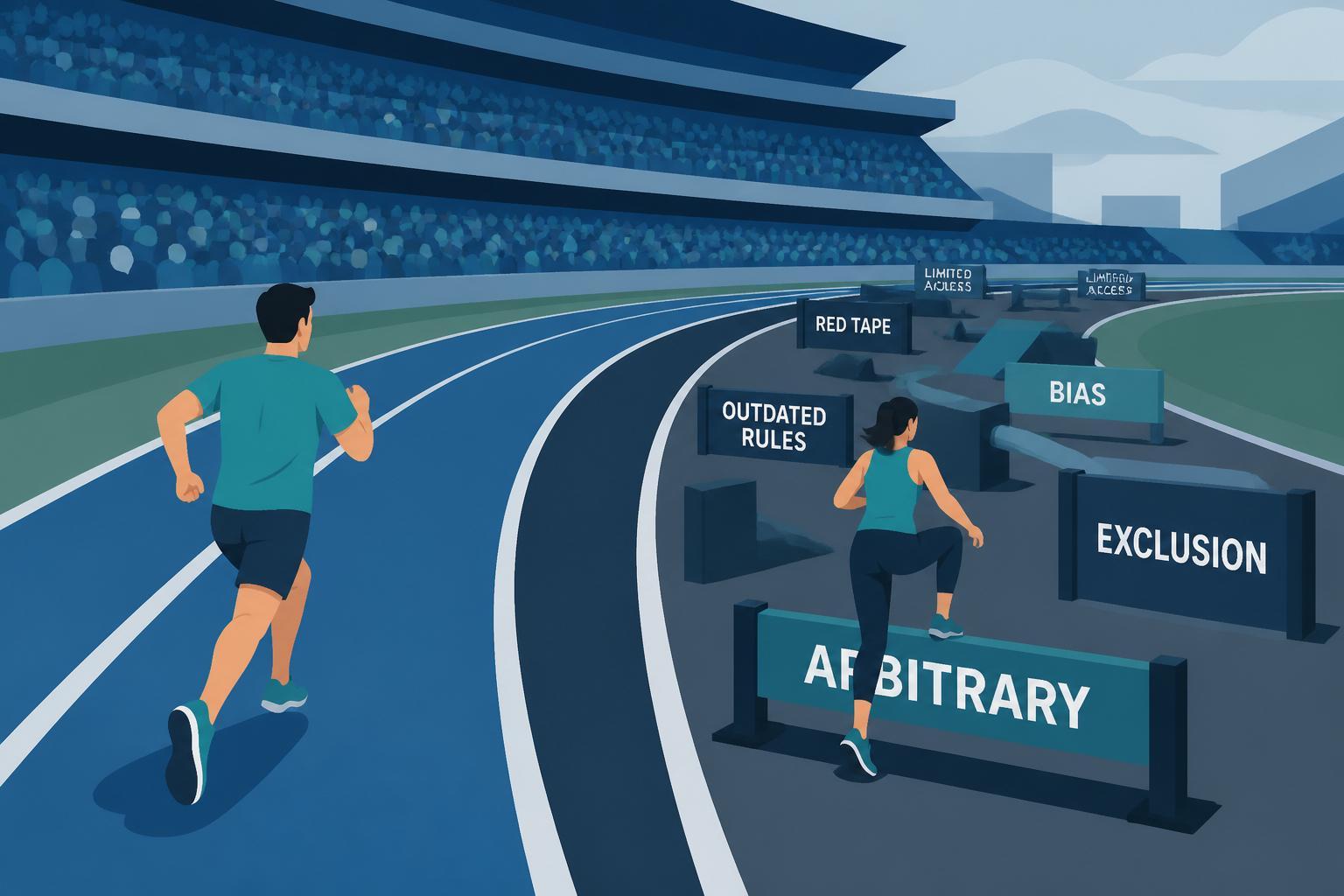
Your agency just received another CISA directive with a six-month remediation clock. Your DevOps team is pushing three releases this quarter. Your security team is buried in assessment documentation. Something has to give, and it can't be security.
This checklist translates DevSecOps principles into specific, verifiable compliance actions. Each item maps to the White House's cyber Executive Order requirements for software supply chain security and aligns with the Risk Management Framework you're already using. Use it to bridge the gap between "we're doing DevSecOps" and "we can demonstrate DevSecOps controls to an assessor."
What This Checklist Covers
This checklist addresses security integration requirements across your System Development Life Cycle (SDLC) when you're operating under FISMA, implementing NIST SP 800-53 controls, or preparing for continuous authorization. It focuses on four areas: team integration, secure component sourcing, testing rigor, and vulnerability coordination. It doesn't cover infrastructure-as-code security or container runtime protection.
Prerequisites
Before starting this checklist, verify you have:
Authority to Operate (ATO) or Continuous Authorization scope defined. Know which systems fall under federal security requirements before applying DevSecOps controls. Good looks like: a documented system boundary in your System Security Plan (SSP) that explicitly includes development and deployment pipelines.
SA-3 (System Development Life Cycle) documented in your SSP. Your assessor will look for this control first. Good looks like: your SSP describes each SDLC phase and identifies where security activities occur, not just a reference to "we follow DevOps."
Roles assigned for both security and development leads. You can't integrate teams without clear ownership. Good looks like: named individuals in your security plan with documented responsibilities for secure development, not "the DevOps team handles it."
Implementation Checklist
Team Integration and Process
1. Document security-development collaboration touchpoints in your SDLC (SA-3, SA-11)
Identify specific meetings, reviews, or gates where security and development teams jointly review code, architecture, or deployment plans.
Done when: Your SSP or SDLC documentation lists at least three recurring touchpoints (sprint planning, pre-deployment review, post-incident retrospective) with named participants from both teams. Good looks like: meeting minutes showing security review of deployment plans before release, with documented risk acceptance for any deferred items.
2. Establish security requirements communication protocol (SA-4)
Create a mechanism for your security team to communicate new requirements (CISA directives, updated STIGs, vulnerability remediation deadlines) to developers in actionable terms.
Done when: You have a documented process (ticketing system, backlog integration, or requirement tracking tool) showing how security requirements enter the development queue with priority assignments. Good looks like: a CISA directive issued in January shows up as prioritized work items in your February sprint, with traceability from directive to deployed fix.
3. Implement "shift left" security training for developers (AT-2, AT-3)
Developers need baseline security knowledge to identify common vulnerabilities during coding, not just during testing.
Done when: Your training records show developers completed secure coding training within the past year, and your SDLC documentation describes security checkpoints at design and coding phases, not just at testing. Good looks like: developers can articulate the OWASP Top 10 during architecture review and reference specific NIST 800-53 controls when discussing authentication design.
Secure Component Sourcing
4. Establish approved software component repository (SA-10, SR-3)
Identify or implement a controlled repository of vetted, hardened software components that your developers can use without introducing supply chain risk.
Done when: Your SSP documents the repository location, approval process for adding components, and scan/validation requirements before components are approved. If you're using DoD Platform One's Iron Bank, document your access and usage. Good looks like: developers can pull container images or libraries from your internal repository knowing they've been scanned for vulnerabilities and meet your security baseline, with Audit Logging showing what was used in each deployment.
5. Generate and maintain Software Bill of Materials for each system (SA-4, SR-4)
You need visibility into what's running in production to respond to new vulnerabilities.
Done when: Each system under your ATO has a current Software Bill of Materials listing all components, versions, and dependencies, updated with each release. Good looks like: when a new CVE drops for Log4j, you can query your SBOM inventory and identify affected systems within hours, not days.
Testing and Validation
6. Implement three-layer security testing (CA-2, CA-8, RA-5)
Move beyond single-method testing to catch different vulnerability types.
Done when: Your SDLC requires (1) automated static analysis during build, (2) automated dynamic testing in pre-production, and (3) manual security review for high-risk changes, with documented results for each layer. Good looks like: your continuous integration pipeline fails builds that introduce critical findings, your staging environment runs weekly dynamic scans, and your security team reviews architecture changes before production deployment.
7. Conduct red team exercises for critical systems (CA-8)
Simulated attacks identify weaknesses that testing tools miss.
Done when: You've completed at least one red team exercise in the past 12 months for systems processing Controlled Unclassified Information or mission-critical functions, with documented findings and remediation status. Good looks like: red team identified three attack paths, you've closed two and documented risk acceptance for the third with compensating controls, and you've scheduled the next exercise.
8. Expand red teaming to non-critical systems with network access (CA-8, RA-3)
A payroll system can be the entry point to your weapons system network.
Done when: Your security assessment plan includes red team or penetration testing for systems that might not be critical themselves but connect to critical networks or data. Good looks like: you've tested your administrative systems, contractor portals, and support applications, not just your mission applications.
Vulnerability Coordination
9. Establish internal vulnerability disclosure program (SI-5, PM-15)
Create a channel for security researchers and your own staff to report vulnerabilities without fear of reprisal.
Done when: You have a documented process for receiving, triaging, and responding to vulnerability reports, with a public contact method if your systems are externally accessible. Good looks like: a security.txt file or documented email address, internal SLA for triage (48 hours for critical findings), and records showing you've received and acted on reports.
10. Monitor CVE Program for relevant vulnerabilities (SI-5, RA-5)
You can't patch what you don't know about.
Done when: Someone on your team has assigned responsibility for monitoring CVE announcements relevant to your technology stack, with a process for cross-referencing against your SBOM and initiating assessment. Good looks like: you learned about a new CVE affecting your web framework within 24 hours of publication, compared it against your SBOM, determined two systems were affected, and initiated patching per your remediation timeline requirements.
Common Mistakes
Treating DevSecOps as a DevOps problem. Security teams often hand requirements to developers and consider their job done. Integration means security staff participate in sprint planning, not just review at the end.
Using "we're Agile" as an excuse to skip documentation. Your assessor doesn't care about your methodology; they care about demonstrating control implementation. Agile and documentation aren't mutually exclusive.
Testing only mission-critical applications. The CISA directive applies to all federal information systems. That administrative portal is in scope.
Assuming third-party testing is sufficient. Your vendor's security testing doesn't satisfy your CA-2 requirement for independent assessment of your system. You still need your own validation.
Confusing vulnerability scanning with security testing. Automated scans are necessary but not sufficient. You need manual review and red teaming to catch logic flaws and complex attack chains.
Next Steps
After completing this checklist:
Map these items to your existing System Security Plan. Most will satisfy SA, CA, SI, and RA family controls you're already required to document.
Integrate into your Continuous Authorization process. These aren't one-time activities; they're ongoing controls that demonstrate continuous security posture.
Brief your assessor before your next evaluation. Walk them through your DevSecOps implementation using this checklist as evidence structure. Don't make them hunt for it in your documentation.
Update your POA&M with any gaps. If you checked "not done" on any item, that's a finding waiting to happen. Document it now with a remediation plan.
The six-month clock on that CISA directive is ticking. Your DevSecOps implementation either helps you meet it or becomes another obstacle. This checklist makes it the former.