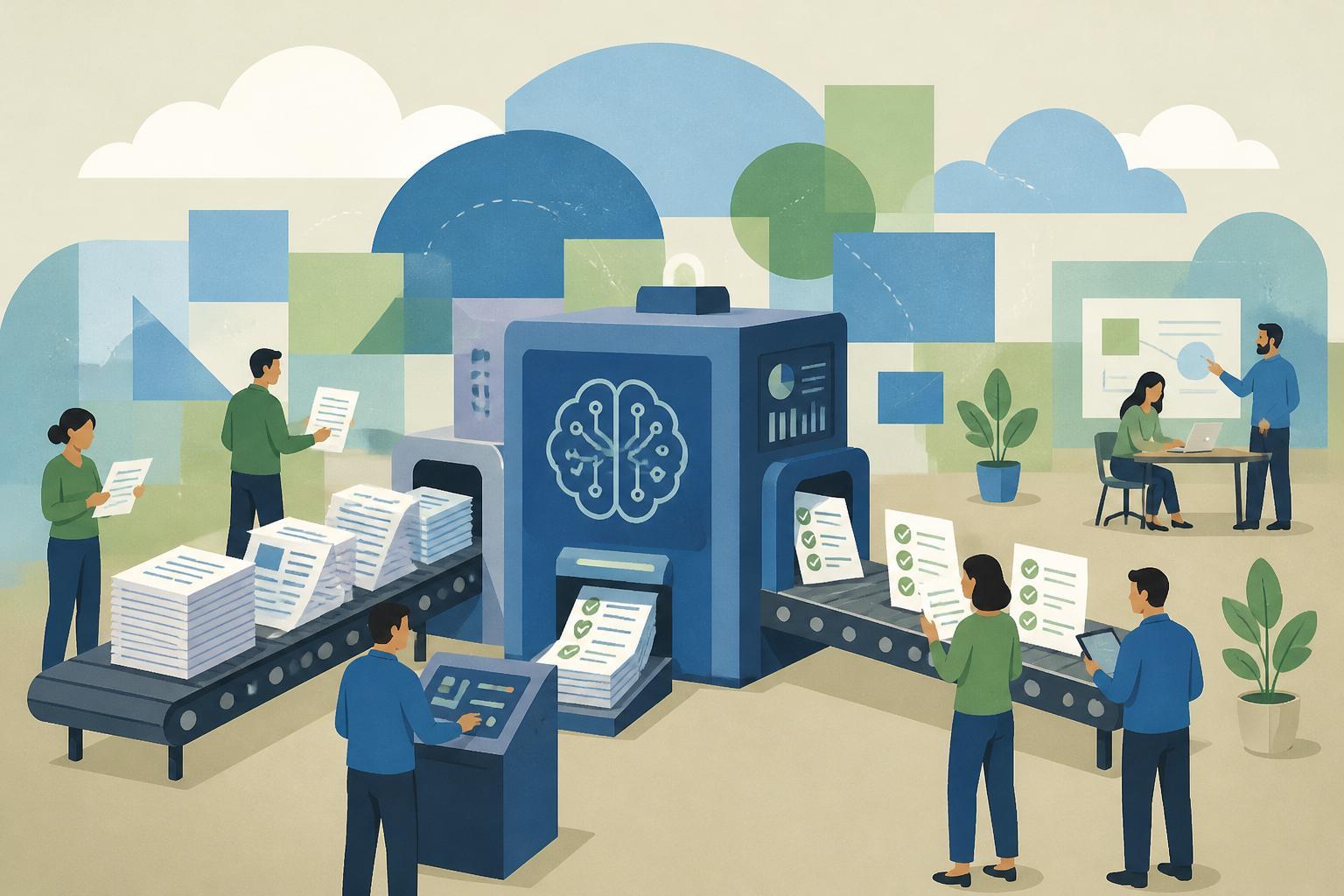
AI can identify vulnerabilities quickly, challenging the traditional approach to FedRAMP compliance. Instead of building a documentation package and waiting months for assessment, you can prepare now for automated evidence generation and continuous monitoring. This checklist will help your team align with FedRAMP 20x and similar initiatives pushing for real-time compliance.
Remember, nothing here changes your obligations under FedRAMP Low/Moderate/High Baseline, NIST SP 800-53 Rev 5, or the Federal Information Security Modernization Act. AI-assisted evidence supports these requirements; it doesn't replace them or your Third-Party Assessment Organization (3PAO). You can't claim authorization before it's granted.
Prerequisites
Before diving into the checklist, ensure you have:
- A current system boundary diagram and inventory.
- Named owners for each control family.
- Access to your configuration, logging, and vulnerability tools at the API or export level.
- A documented Shared Responsibility Model and Customer Responsibility Matrix.
- Leadership agreement that evidence automation is a program priority.
Checklist
1. Map every control to a machine-readable evidence source.
Ensure each NIST SP 800-53 Rev 5 control in your baseline is linked to a system, log, or configuration. Avoid relying solely on narrative prose. A control-to-evidence matrix should allow a reviewer to trace any control to a live data source without needing screenshots.
2. Establish authoritative asset inventory (CM-8).
Your inventory should update automatically from discovery tools and align with your boundary diagram. Aim for zero unexplained assets in scans, with any discrepancies flagged promptly.
3. Baseline and monitor configurations (CM-2, CM-6).
Codify hardened baselines, including Security Technical Implementation Guide settings, and check them continuously. Deviations should generate tickets automatically, and you should be able to produce a current configuration state on demand.
4. Run Vulnerability Assessments on a continuous cadence (RA-5).
Ensure scanning covers all in-boundary components and feeds a tracked remediation queue. Measure remediation timelines against your policy, with exceptions having owners and expiry dates.
5. Treat AI-generated findings as inputs, not conclusions.
Any AI-assisted analysis should have a named human reviewer and a recorded disposition. Maintain an audit trail showing what the model flagged, who validated it, and the actions taken.
6. Centralize Audit Logging and review (AU-2, AU-6, AU-12).
Logs should flow to a protected store with defined retention and automated correlation. You should be able to answer "who did what, when" for any in-scope system without manual log collection.
7. Automate Plan of Action and Milestones tracking (CA-5).
POA&M entries should sync with vulnerability and configuration findings. Avoid orphaned findings and stale due dates, and generate monthly deliverables from the same data your engineers use.
8. Document continuous monitoring strategy (CA-7).
Your plan should specify what is monitored, at what frequency, by what tool, and who acts. Ensure your 3PAO can test against actual telemetry rather than a policy that exists only on paper.
9. Control supply chain exposure (SR family).
Maintain a Software Bill of Materials for in-boundary software and track component vulnerabilities. When a new vulnerability is disclosed, identify affected systems the same day.
10. Govern your own AI tooling (SA-9, AC-6, SC-7).
Assess, scope, and limit access to any AI service that touches boundary data. Inventory and rotate Non-Person Entity credentials. AI tools should not have broader privileges than the humans they assist.
11. Use FIPS 140-2 validated cryptography where required (SC-13).
Confirm modules against the Cryptographic Module Validation Program listing. Keep a current list of modules and certificate numbers tied to each in-boundary service.
12. Rehearse assessor access.
Test giving your 3PAO read-only, time-boxed access to evidence repositories. Assessors should sample live evidence directly, allowing your team to focus on findings instead of file requests.
13. Define reuse across agencies.
Structure your package, Customer Responsibility Matrix, and evidence so multiple agencies can use one authorization. An agency security officer should map your documentation to their requirements without a new assessment cycle.
14. Track your own time-to-evidence.
Measure how long it takes to produce evidence for a given control on request. Record a baseline to improve against using your own data.
Common Mistakes
- Automating bad evidence. Validate that the source is authoritative before automating exports.
- Letting an AI summary stand in for a control narrative. Ensure generated text has a responsible human who can defend it to an assessor.
- Ignoring the model as part of your boundary. Include any tool that ingests your logs or code in your risk analysis.
- Assuming the 3PAO role disappears. Independent assessment remains a requirement. The change is in how much evidence collection happens before they arrive.
- Overclaiming. Don't describe a system as authorized, or a control as automated, before it's demonstrably true.
Next Steps
Start with items 1 through 4; they create the data foundation everything else depends on. Then brief your 3PAO on your continuous evidence approach and ask how they'd test it. Watch FedRAMP 20x guidance and FedRAMP Board communications for changes to submission and monitoring expectations. Align your roadmap to published requirements. The teams best positioned for faster authorization will have trustworthy, machine-readable evidence ready before it's requested.